
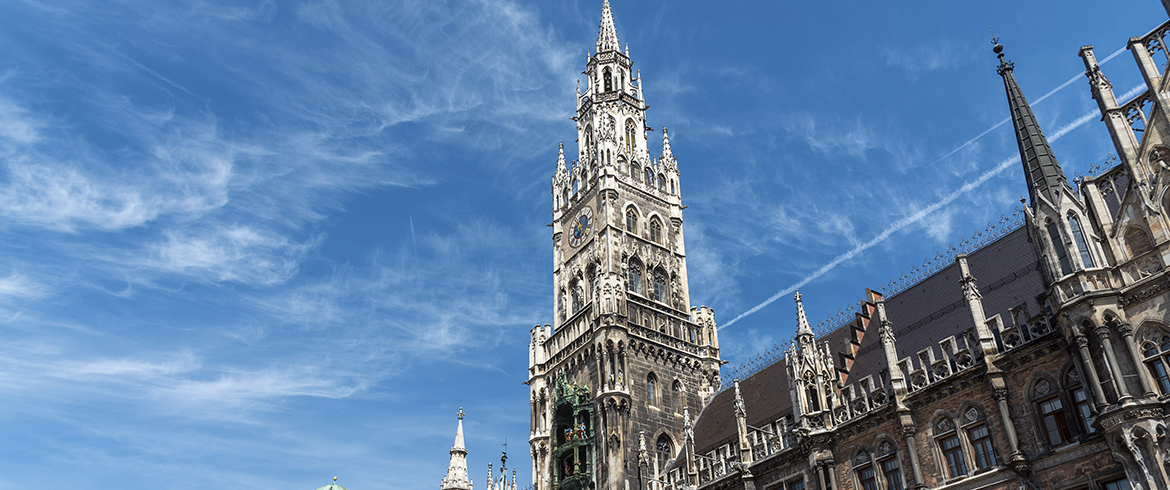
Marienplatz is the central square of the old town of Munich and one of the most famous historical places in the city. It connects important buildings, churches and roads in the heart of Munich. The square reflects different periods of Bavarian history in architecture , in urban development , and has been a meeting place for many centuries .
Marienplatz, Munich: History and Main Buildings
Marienplatz is steeped in history, dating back to medieval times when the square emerged as the hub of city life. There were markets, public events and important gatherings. It continues to be a main attraction for visitors wanting to experience the historic character of Munich.
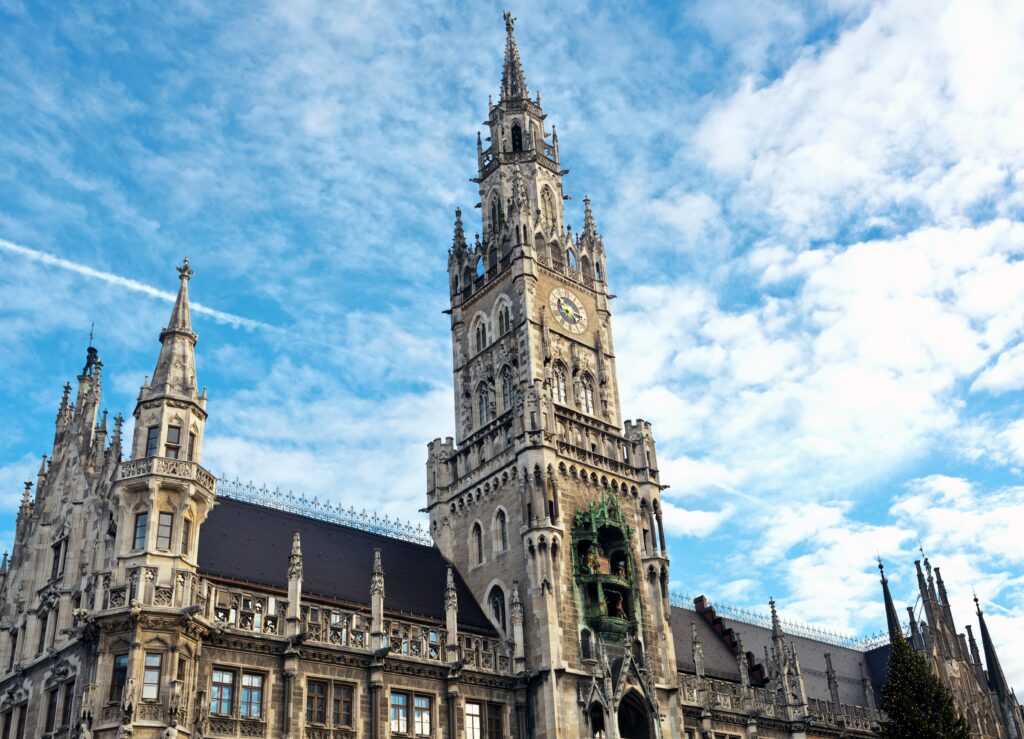
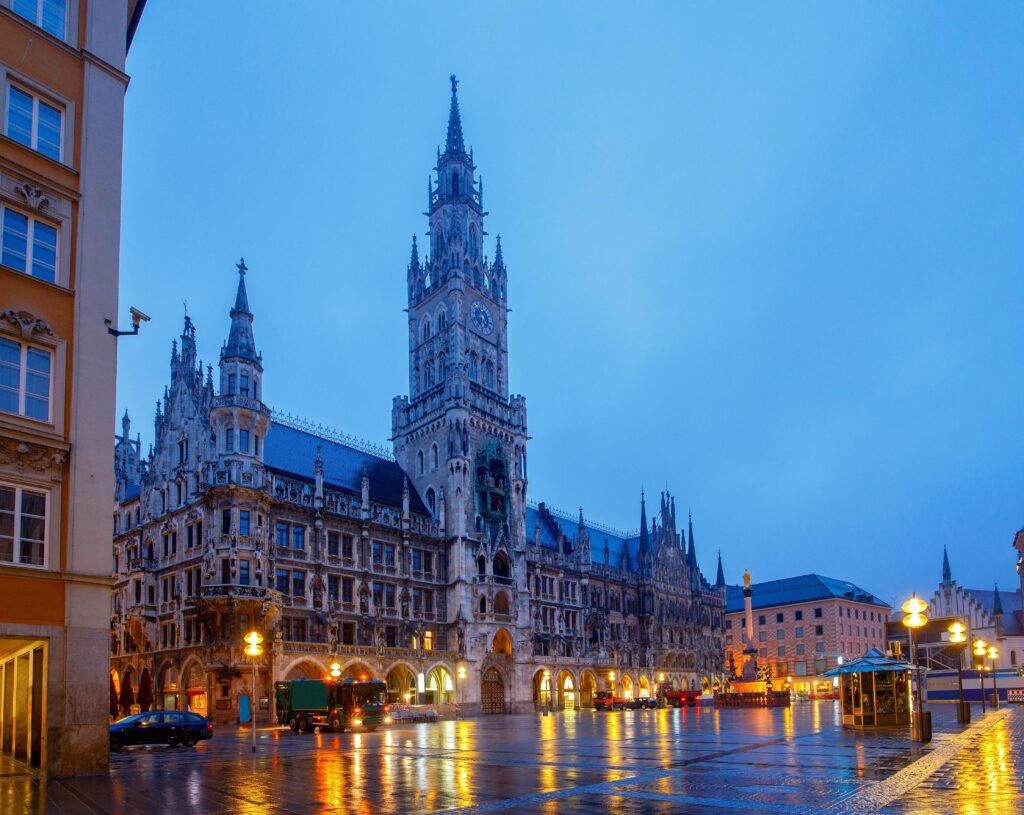
The most prominent structure on the square is the New Town Hall, or Neues Rathaus. The large gothic facade gives the impression of medieval times, but the building was actually built at the end of the 19th century. It is typical of the Gründerzeit, when many buildings were built in historical forms, inspired by earlier architectural styles.
The Rathaus has a large tower and detailed decorations. One of its most famous features is the Glockenspiel, a mechanical clock with moving figures. The display presents scenes connected with Bavarian traditions and attracts many people who visit the square.
Architectural Landmarks Around the Square
Near Marienplatz there are several important religious and historical buildings. The Frauenkirche, officially called the Cathedral of Our Dear Lady, is one of the strongest symbols of Munich. Unlike the New Town Hall, it is a real medieval building.
The church was built in the late Gothic period and is famous for its two large towers. Their shape can be seen from many parts of the city.
Inside the Frauenkirche, visitors can see religious artworks and historical monuments. One interesting object is the tomb monument connected with the Habsburg dynasty. The interior has a large open space with a simple style that differs from many other Gothic churches.
Important places around Marienplatz:
- Neues Rathaus with its decorated facade and famous Glockenspiel.
- Frauenkirche with its twin towers and medieval architecture.
- Old Town Hall with historical elements from Munich’s past.
- Nearby streets with traditional buildings and city squares.
These buildings show how different historical periods exist together in the same area. Medieval churches, nineteenth–century architecture, and modern city life create a mixed urban environment.
Marienplatz, Munich, as a Cultural and Urban Center
Marienplatz Munich is not only an architectural location but also a place connected with everyday city activities. Streets around the square lead to shopping areas, historical routes, and other important parts of central Munich.
Visitors walking through Marienplatz can easily reach other famous buildings. The area around the square contains many examples of Bavarian architecture and cultural heritage. It is also an important transport point because underground and railway connections are located nearby.
Churches and Religious Architecture Near Marienplatz
Another important religious building close to the square is Asamkirche. It is located a short walk south from Marienplatz and represents the height of Bavarian Baroque architecture. The church is smaller than Frauenkirche but has a very rich interior design with detailed decorations and artistic elements.
Asamkirche was created in the eighteenth century and shows the artistic traditions of the Baroque period. Its interior includes paintings, sculptures, and decorative details that create a different atmosphere compared with the more simple style of Frauenkirche.
The main cultural features of the area are:
- A combination of medieval, Gothic, Baroque, and nineteenth–century architecture.
- Historical buildings connected with religion, government, and city life.
- Public spaces where traditions and modern activities meet.
The square also provides views toward the city’s historical structures. From some locations, visitors can see the towers of Frauenkirche and the detailed facade of the Rathaus together. The combination creates one of the most recognizable views of Munich.
The Marienplatz still serves as a symbol of the connection between Munich’s past and present. The square is a part of everyday urban life, and still has its historical character. It is used as a route for transportation, cultural visits, celebrations and public events.
The architecture around explains how the city grew over the centuries. The medieval church shows the older religious traditions; the New Town Hall shows the 19th–century interest in historical styles. Nearby Baroque buildings add another artistic period to the area.
A trip to Marienplatz gives a good overview of Munich without going far. The square is a good starting point to explore the old town and to understand the history of the Bavarian capital. The buildings, streets and public spaces of the city create a place connecting architecture and city traditions.